Vector Art of Group of Hippopotamus: A Design Evaluation
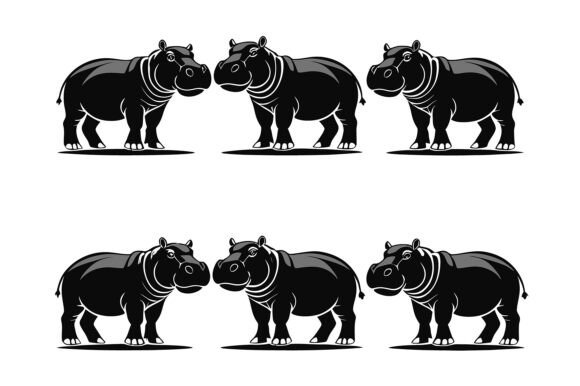
In the realm of digital illustration and graphic design, the choice of asset format often dictates the longevity and versatility of a project. The Vector Art of Group of Hippopotamus represents a specific category of digital assets designed to meet high standards for scalability and customization. This type of illustration typically features a cluster of hippopotamus figures rendered in a style that balances artistic expression with technical precision. For designers, crafters, and content creators, understanding the utility of this specific vector file is essential before integrating it into a workflow.
This article evaluates the practical application of this vector art, examining its technical specifications, potential use cases, and the considerations required to determine if it aligns with specific project goals. By analyzing the balance between the included EPS and JPEG formats, readers can make informed decisions regarding their design needs.
Understanding the Technical Composition
The core value of the Vector Art of Group of Hippopotamus lies in its format. Unlike raster images, which are composed of a fixed grid of pixels, vector graphics utilize mathematical equations to define lines, curves, and shapes. The primary file provided is an EPS (Encapsulated PostScript) file. This format is industry-standard for professional design software such as Adobe Illustrator or CorelDRAW.
The significance of the EPS format cannot be overstated for projects requiring resizing. When a designer scales a raster image beyond 100%, the result is often pixelation or blurring. In contrast, the vector nature of this hippopotamus group illustration ensures that the artwork remains crisp and sharp at any size, from a small business card logo to a massive billboard. Furthermore, the "fully editable" aspect means that individual elements within the group—such as the outline of a single hippo, the color fill, or specific decorative details—can be modified without degrading the overall quality.
Accompanying the EPS file is a high-resolution JPEG. While JPEGs are raster-based and lack the infinite scalability of vectors, they serve a critical function for users who do not possess vector editing software. This file offers a ready-to-use option for quick-turnaround projects where immediate visualization is necessary, though it comes with inherent limitations regarding size adjustments.
Primary Use Cases and Applications
Designers and hobbyists often seek the Vector Art of Group of Hippopotamus for its thematic versatility. Hippos are popular subjects in children's education, wildlife conservation branding, and playful merchandise. The "group" composition adds dynamic energy to the design, making it suitable for scenes rather than isolated iconography.
Print-on-Demand and Apparel
One of the most common applications for this asset is in the creation of custom apparel. T-shirts, hoodies, and tote bags require high-quality graphics that withstand printing processes like screen printing or direct-to-garment (DTG). The vector format allows the design to be resized to fit various garment sizes without losing definition. The ability to change colors via vector software also enables sellers to create multiple variations of the same design to match different fabric colors.
Educational and Children's Materials
The subject matter makes this illustration a strong candidate for educational materials. Teachers and publishers often need engaging visuals for flashcards, storybooks, or classroom posters. The clear lines and distinct shapes found in vector art are particularly effective for coloring books or activity sheets, where clarity is paramount.
Crafting and DIY Projects
For the DIY enthusiast, the versatility of the file extends to physical crafting. Users with cutting machines, such as Cricut or Silhouette, often require vector files (usually converted to SVG) to cut vinyl, paper, or fabric. The clean paths in the Vector Art of Group of Hippopotamus facilitate precise cutting, allowing for the creation of stickers, scrapbook embellishments, and wall decals.
Benefits and Tradeoffs
When evaluating whether to utilize this specific asset, it is important to weigh the benefits against potential tradeoffs. The primary benefit is flexibility. The inclusion of both EPS and JPEG files caters to two distinct user bases: the professional designer seeking full control and the casual user needing a quick solution. The originality of the design, created through AI-assisted concepts and then manually vectorized, ensures a unique look that avoids the generic feel of stock photography.
However, there are tradeoffs to consider. The reliance on vector software for the EPS file creates a barrier to entry for users unfamiliar with tools like Adobe Illustrator. Without these tools, the full potential of the "fully editable" feature remains inaccessible. Additionally, while the manual editing process ensures high quality, the style is fixed. If a project requires a photorealistic depiction of hippos, this stylized vector illustration may not be the appropriate choice.
Another consideration is the licensing and usage rights. As with many digital assets, users must verify the terms of use, particularly for commercial applications. While the description suggests suitability for print-on-demand and branding, specific restrictions may apply regarding redistribution or resale of the unmodified file itself.
Situations Where Alternatives May Be Preferable
While the Vector Art of Group of Hippopotamus is robust for many scenarios, it is not a universal solution. There are situations where alternative assets might better serve the project's objectives.
If a project demands photorealism, such as a scientific journal cover or a documentary poster, a high-resolution photograph or a 3D render would be superior. Vector illustrations, by their nature, simplify forms and rely on solid colors or gradients, which may not capture the texture and nuance of real animal skin.
Furthermore, if the timeline is extremely tight and the user lacks access to vector editing software, relying solely on the included JPEG might limit the scope of the project. In such cases, purchasing a pre-rasterized image specifically sized for the intended output could save time, even if it sacrifices future scalability.
Finally, if the design requires a highly complex background or integration with other photographic elements, a flat vector illustration might require significant additional work to blend seamlessly. In these instances, a composite image created from scratch or a more comprehensive stock photo might offer a faster path to completion.
Decision-Making Insights
To determine if this asset aligns with your goals, consider the following questions:
- Do I need to resize the image significantly? If the answer is yes, the EPS vector file is essential to maintain quality.
- Is color customization required? If you need to adapt the design to specific brand colors, the editable vector format is necessary.
- What is my technical proficiency? If you are comfortable using vector software, the full suite of features is available. If not, the JPEG provides a limited but functional alternative.
- What is the final medium? For large-format prints, embroidery, or laser cutting, the vector format is non-negotiable. For simple web thumbnails or social media posts, the JPEG may suffice.
Ultimately, the Vector Art of Group of Hippopotamus serves as a versatile tool for those who value scalability and customization. Its hybrid delivery of vector and raster files bridges the gap between professional design requirements and casual usage. By understanding the strengths and limitations of the format, creators can effectively leverage this illustration to enhance their projects, ensuring that the final output meets both aesthetic and technical standards.