Various Types of Thai Food Dishes: A Creative Resource for Designers and Entrepreneurs
When you think about various types of Thai food dishes, your mind likely drifts to the vibrant colors of a Pad Thai, the steam rising from a bowl of Tom Yum soup, or the intricate presentation of a green curry. For chefs and foodies, these are culinary experiences. However, for creators, marketers, and small business owners, these iconic meals represent something equally powerful: visual storytelling. The intersection of culture, appetite, and design creates a unique opportunity to use high-quality illustrations of Thai cuisine to elevate projects ranging from restaurant menus to digital marketing campaigns.
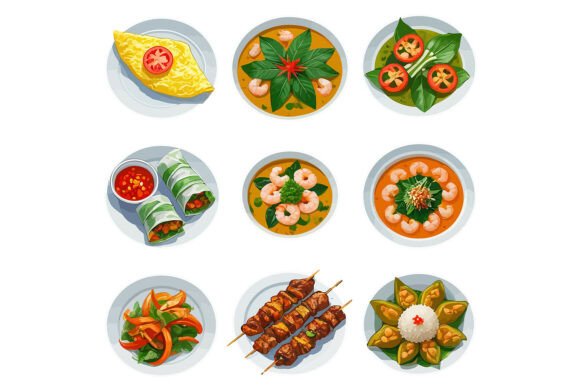
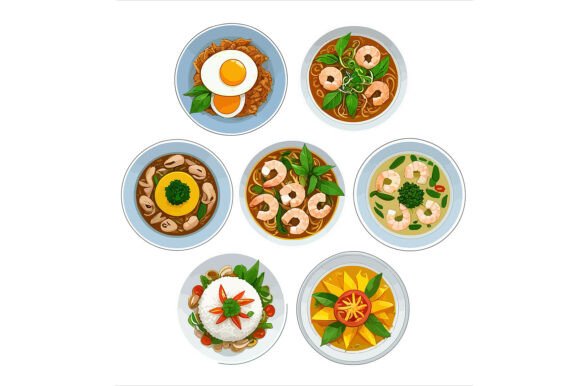
This specific vector illustration collection captures the essence of Thai gastronomy in a way that is both authentic and adaptable. It isn't just a picture; it is a flexible tool designed to solve common design challenges. Whether you are launching a new street food stall, creating educational materials for a language class, or designing merchandise for a travel blog, having access to accurate, scalable graphics of various types of Thai food dishes can save hours of research and editing time while ensuring your final product looks professional.
Why Visual Accuracy Matters in Food Design
In the world of food marketing, visuals are often the first point of contact between a brand and its audience. A blurry photo or a generic clip-art image can undermine the perceived quality of a product. This is where a dedicated vector set becomes essential. Unlike standard raster images that pixelate when enlarged, this EPS file allows you to resize elements without losing any crispness. If you need a small icon for a social media story or a massive mural for a restaurant wall, the same file works perfectly for both scenarios.
The ability to customize details is another critical advantage. Perhaps you want to highlight the basil leaves in a Basil Pork dish (Pad Krapow) or adjust the shade of red in a spicy Som Tum salad to match your brand's color palette. With fully editable layers, you can tweak colors, separate ingredients, or rearrange components to fit your specific layout. This flexibility ensures that the representation of various types of Thai food dishes aligns exactly with your creative vision, rather than forcing your design to adapt to a rigid image.
Real-World Applications for Creators and Business Owners
The utility of this resource extends far beyond simple decoration. Let's look at how different professionals can leverage these illustrations in practical, revenue-generating ways.
Restaurant Branding and Menu Design
For restaurant owners, especially those specializing in Asian cuisine, the menu is a primary sales tool. Using high-resolution JPEGs or vectors of signature dishes like Green Curry, Massaman, or Mango Sticky Rice can make a digital menu pop on tablets or a printed menu feel premium. Instead of relying on stock photos that might look staged or unappetizing, custom vector art allows you to create a cohesive theme. You could design a series of icons representing "Spicy," "Sweet," or "Sour" profiles based on the actual ingredients shown in the illustration, helping customers navigate their choices quickly.
Print-on-Demand and Merchandise
Entrepreneurs in the print-on-demand space often struggle to find niche designs that stand out. A t-shirt featuring a stylized, artistic rendering of Pad See Ew or Drunken Noodles appeals to food lovers and travelers alike. Because the file includes an EPS format, you can easily manipulate the artwork to fit the contours of a mug, tote bag, or poster. The clean lines of vector art ensure that when the design is printed on fabric, the colors remain vibrant and the details sharp, even after multiple washes. This opens up a market for apparel that celebrates culinary culture without looking cheesy.
Educational and Cultural Materials
Teachers and content creators focusing on geography, culture, or language education can benefit significantly from clear, labeled illustrations. When teaching students about Southeast Asian culture, showing a diagram of various types of Thai food dishes helps explain regional differences and ingredient usage. The editable nature of the file means educators can add text labels directly onto the design, pointing out specific herbs, spices, or cooking methods. This transforms a static image into an interactive learning aid suitable for textbooks, slide decks, or online courses.
Digital Scrapbooking and Personal Projects
Hobbyists who enjoy scrapbooking or planning events also find value in these resources. Imagine organizing a Thai-themed dinner party or a cultural festival. Invitations, table cards, and signage become much more engaging when they feature consistent, high-quality graphics. The included JPEG files offer a quick solution for last-minute digital invites, while the vector files allow for precise cutting if you are using them with die-cut machines for physical decorations.
Understanding the File Formats and Their Benefits
To get the most out of this resource, it is important to understand the difference between the provided formats. The EPS file is the powerhouse of the package. It contains the vector data, meaning every line and shape is mathematically defined. This makes it ideal for professional design software like Adobe Illustrator, CorelDRAW, or Inkscape. If you are a graphic designer preparing assets for large-scale printing, such as banners or billboards, the EPS file is non-negotiable. It guarantees that the edges remain smooth and the resolution is infinite.
On the other hand, the High-resolution JPEG serves as a ready-to-use option for quick tasks. If you need to drop an image into a PowerPoint presentation, upload it to a website, or share it on social media immediately, the JPEG saves you the step of opening vector software. While it lacks the editability of the EPS, it provides excellent quality for screen viewing and standard print sizes. Having both formats ensures that whether you are a professional designer or a casual user, you have the right tool for the job.
What to Consider Before Using These Assets
While this illustration set offers immense versatility, there are a few considerations to keep in mind before integrating it into your workflow. First, ensure you have the appropriate software to open and edit the EPS file. If you do not have access to vector editing tools, you may be limited to the JPEG version, which restricts your ability to change colors or separate elements. Second, consider the context of your project. While the design is original and created with AI-assisted concepts followed by human vectorization, always verify that the style matches your brand identity. A highly stylized cartoon look might not suit a fine-dining establishment, whereas it would be perfect for a fun, casual street food truck.
Additionally, think about the scalability of your project. If you plan to use the design across multiple mediums—from a business card to a storefront sign—the vector format is your safest bet. Relying solely on the JPEG for large prints can lead to pixelation, which detracts from the professional appearance of your work. Finally, remember that while the file is customizable, the core concept remains rooted in traditional Thai cuisine. Respectful representation of cultural elements is key, so ensure that any modifications you make maintain the integrity and authenticity of the dishes depicted.
Bringing Culinary Culture to Life
Ultimately, the goal of using various types of Thai food dishes in your designs is to evoke emotion and appetite. Food is universal, but its presentation varies wildly across cultures. By utilizing a high-quality, editable vector illustration, you bridge the gap between complex culinary traditions and modern design needs. Whether you are crafting a logo for a new noodle bar, creating a lesson plan for a history class, or simply making a fun birthday invitation, these assets provide a foundation of creativity and professionalism.
The combination of technical flexibility and cultural richness makes this resource a valuable addition to any creator's toolkit. It empowers you to tell stories through food, turning simple ingredients into compelling visual narratives that resonate with audiences everywhere. By choosing the right format and applying it thoughtfully, you can transform ordinary projects into memorable experiences that celebrate the vibrant flavors of Thailand.