Illustration of a Salad, Healthy Food: A Practical Asset for Modern Design Workflows
In the fast-paced environment of modern creative work, the ability to source high-quality visual assets that are both versatile and immediately usable is a critical component of project efficiency. An Illustration of a Salad, Healthy Food serves as more than just a decorative element; it is a functional tool that can streamline design processes, enhance brand communication, and support diverse marketing strategies. Whether you are a freelancer managing multiple client deadlines, a small business owner launching a new product line, or an educator creating engaging materials, understanding how to integrate this specific vector asset into your workflow can significantly reduce production time while maintaining professional standards.
Understanding the Asset and Its Role in the Creative Process
The core value of this specific digital file lies in its dual-format delivery system. You receive one fully editable EPS (Encapsulated PostScript) vector file and one high-resolution JPEG image. This combination addresses two distinct phases of the creative lifecycle: rapid prototyping and final production. The JPEG allows for immediate visualization, enabling you to mock up concepts on websites, social media posts, or presentation slides without opening heavy vector software. It acts as a placeholder or a quick-turnaround asset when time is the primary constraint.
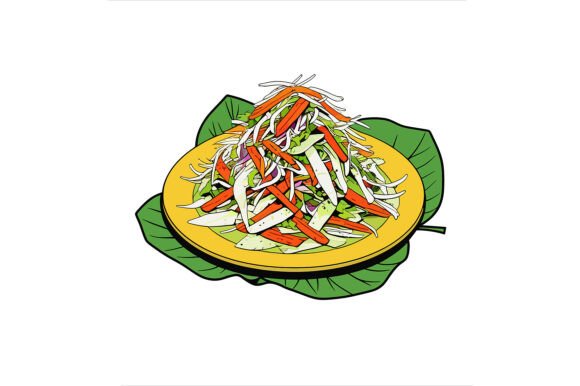
Conversely, the EPS file represents the professional standard for scalability and customization. Because it is vector-based, the Illustration of a Salad, Healthy Food can be resized infinitely without pixelation or loss of clarity. This is essential for projects ranging from tiny icons on a mobile app interface to massive billboard advertisements. The vector nature of the file ensures that the crisp lines of the lettuce, tomatoes, and other ingredients remain sharp regardless of the output medium. In a broader process, this asset fits into the "execution" phase of a project, bridging the gap between conceptual planning and final deliverable creation.
Integration into Pre-Production and Planning Phases
Before any design work begins, effective planning involves gathering resources that align with the project's aesthetic and technical requirements. When initiating a campaign focused on wellness, nutrition, or lifestyle branding, selecting the right imagery is a strategic decision. Incorporating an Illustration of a Salad, Healthy Food early in the mood board stage helps define the visual tone. Unlike stock photography, which can sometimes feel generic or require complex retouching, a stylized vector illustration offers a consistent look that can be easily adapted to match existing brand colors.
During the planning stage, designers often need to present options to clients or stakeholders. The included JPEG file facilitates this by allowing for quick assembly of concept boards. You can place the salad illustration alongside typography and color swatches to demonstrate how the final product might look. This accelerates the approval process, as stakeholders can visualize the outcome without waiting for vector files to be processed. Furthermore, because the design is original and created with AI-assisted concepts before being manually vectorized and edited, it avoids the common pitfalls of generic clip art, offering a unique touch that elevates the perceived value of the proposal.
Execution: Customization and Workflow Efficiency
Once the concept is approved, the execution phase leverages the full potential of the EPS format. The primary advantage here is editability. In many design workflows, a client will request specific changes, such as altering the color palette to match their corporate identity or adjusting the composition to fit a specific layout. With a raster image, these changes are often impossible without starting over. However, with the Illustration of a Salad, Healthy Food in EPS format, you can open the file in vector software like Adobe Illustrator, CorelDRAW, or Affinity Designer and modify individual elements.
You can change the green hues of the leaves to match a brand's specific hex code, adjust the size of the bowl, or even isolate specific ingredients to create variations of the same theme. This flexibility is crucial for creating cohesive marketing suites. For example, if you are designing a menu for a health-focused restaurant, you might use the full salad illustration for the cover but extract just the tomato or leaf elements to decorate section headers. This modular approach saves hours of manual drawing time and ensures visual consistency across all printed and digital materials.
Application Across Diverse Platforms and Products
The versatility of this asset extends well beyond standard graphic design tasks. Its high resolution and clean lines make it suitable for a wide array of physical and digital applications, fitting seamlessly into various business models and personal projects.
- Print-on-Demand Merchandise: For entrepreneurs selling apparel, the scalable nature of the vector file ensures that the design looks crisp on t-shirts, tote bags, and mugs. The clean edges prevent bleeding issues during the printing process, a common problem with low-quality images.
- Branding and Logos: Small businesses in the food industry or wellness sector can adapt this illustration as a logo mark or a supporting icon. The simplicity of the style makes it recognizable even at small sizes, which is vital for favicons, app icons, and social media avatars.
- Educational Materials: Educators and content creators can use the image to illustrate nutritional guides, school worksheets, or blog posts about healthy eating. The clear, distinct shapes make it easy for readers to identify different components of a balanced diet.
- Digital Scrapbooking and Invitations: Hobbyists and event planners can utilize the JPEG version for quick assembly of digital invitations for health retreats or baby showers, or incorporate it into scrapbook layouts documenting family wellness journeys.
Technical Considerations and Quality Control
To maximize the utility of the Illustration of a Salad, Healthy Food, it is important to understand the technical specifications and best practices for handling the files. While the JPEG is convenient for web use and presentations, it should not be used for large-scale print jobs where resolution matters. Always revert to the EPS file for any print-on-demand products, posters, or wall art to ensure maximum fidelity. When working with the vector file, maintain the layer organization provided in the original download. This structure typically separates the background, main subject, and details, allowing for non-destructive editing.
Compatibility is another key factor. Most professional design software supports EPS files, but if you are using a free or limited version of a design tool, ensure it can handle the specific version of the EPS file provided. If necessary, converting the EPS to SVG (Scalable Vector Graphics) can offer better compatibility for web development and some online design platforms. Regularly backing up the original EPS file is also a wise practice. Once you begin customizing colors or shapes, save your modified versions under new names to preserve the original asset for future projects or different clients.
Long-Term Value and Strategic Use
Investing time in organizing and utilizing high-quality assets like this salad illustration yields long-term benefits for your creative workflow. By building a library of reliable, editable vectors, you reduce the dependency on external stock photo subscriptions for every minor project. This asset becomes part of your reusable toolkit, ready to be deployed whenever a project requires a fresh, healthy, or natural aesthetic.
Furthermore, the fact that the design was created with AI-generated concepts and then meticulously refined by a human designer ensures a balance between modern innovation and artistic control. This hybrid approach results in an image that feels contemporary yet polished, avoiding the uncanny or overly mechanical look that pure AI generation can sometimes produce. As trends in design shift towards cleaner, more illustrative styles, having a robust collection of such assets positions you to respond quickly to market demands.
Ultimately, the Illustration of a Salad, Healthy Food is not just a picture; it is a strategic resource. By understanding its technical capabilities and integrating it thoughtfully into your pre-production, execution, and distribution phases, you can enhance the quality of your output while optimizing your time. Whether you are crafting a DIY project, launching a new brand, or simply looking to add a touch of creativity to your daily work, this flexible vector asset provides the foundation for successful visual communication.