Evaluating the Illustration of Pizza Slice for Professional and DIY Design Projects
In the realm of graphic design, food imagery serves as a universal language, instantly communicating themes of comfort, celebration, and culinary delight. Among these subjects, the Illustration of Pizza Slice stands out as a versatile asset that bridges the gap between casual aesthetics and professional branding requirements. For designers, crafters, and small business owners aged 20 to 50, selecting the right visual resource is often a balancing act between aesthetic appeal, technical flexibility, and cost-efficiency. This article examines the specific attributes of this vector illustration, comparing its utility against other common formats and styles to help you determine if it fits your specific project needs.
Understanding the Technical Distinction: Vector vs. Raster Formats
The primary advantage of an Illustration of Pizza Slice provided in EPS (Encapsulated PostScript) format lies in its nature as a vector graphic. Unlike raster images, which are composed of a fixed grid of pixels, vector graphics are defined by mathematical equations describing lines, curves, and shapes. This fundamental difference dictates how the image behaves when manipulated. When you scale a raster image—such as a standard JPEG or PNG—beyond its original resolution, the result is pixelation and blurriness. In contrast, an editable vector file allows for infinite resizing without any degradation in quality.
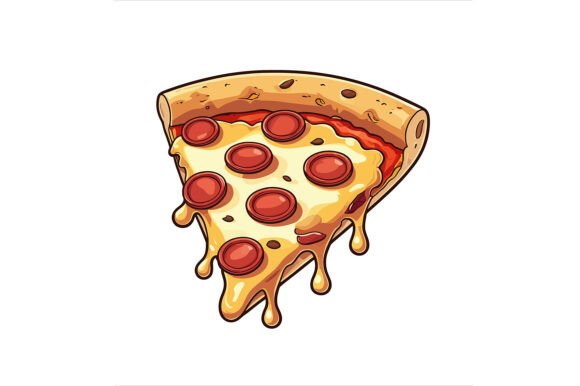
For professionals working on large-scale print projects like posters, banners, or wall art, this scalability is non-negotiable. A high-resolution JPEG might suffice for a social media post, but it will likely fail when printed on a t-shirt or a billboard. The included EPS file ensures that the crisp edges of the cheese, the texture of the crust, and the vibrant colors of the toppings remain sharp regardless of the output size. Furthermore, the vector format grants full control over individual elements. You can isolate the pepperoni from the sauce, change the color of the cheese to match a brand palette, or adjust the angle of the slice entirely within vector software. This level of customization is simply not possible with static raster files.
Comparing Styles: Photorealism vs. Stylized Illustration
When sourcing pizza imagery, creators typically face a choice between photorealistic photography and stylized illustration. Each approach serves different psychological and functional purposes. Photographs offer authenticity and appetite appeal, making them ideal for restaurant menus where the goal is to show exactly what the customer will receive. However, photographs can sometimes feel too literal or generic for creative branding.
An Illustration of Pizza Slice, particularly one created with clean lines and bold colors, offers a distinct stylistic alternative. It conveys a sense of fun, nostalgia, and creativity that photography often lacks. This style is particularly effective for greeting cards, stickers, and educational materials where the subject matter needs to be engaging rather than strictly documentary. For instance, a children's book about nutrition or a school event invitation benefits from the playful interpretation of food found in illustrations, whereas a fine dining establishment would likely prefer a photograph. The tradeoff here is between realism and artistic expression; the illustration sacrifices the texture of real dough and melted cheese for a timeless, adaptable graphic identity.
Assessing Customization Capabilities
One of the most significant factors in evaluating this resource is the degree of editability. Many stock image libraries offer "premium" photos that are high-quality but locked in their composition. If you need a blue pizza slice to match a corporate logo, a photo requires complex Photoshop manipulation that can still look unnatural. With the fully editable Illustration of Pizza Slice, changing the color scheme is a simple process of selecting the object and altering the fill value. This capability makes the asset highly efficient for branding exercises where consistency across various touchpoints is required.
However, it is important to acknowledge the limitations. While the vector format allows for shape and color changes, it does not inherently provide the textural depth of a high-end photograph unless those textures are manually added by the designer. If your project relies heavily on the sensory experience of "crunchy" or "greasy," a stylized vector may require additional work to convey those physical sensations effectively. Therefore, the decision depends on whether your priority is structural versatility or textural realism.
Practical Applications and Use Cases
The versatility of this Illustration of Pizza Slice extends across a wide range of applications, from digital marketing to tangible merchandise. Understanding where this asset excels can help you allocate your resources more effectively.
- Print-on-Demand Products: For entrepreneurs selling t-shirts, mugs, or tote bags, the ability to resize the image without losing clarity is crucial. The EPS format ensures that the design looks professional on both a small coaster and a large hoodie. The clean lines of the illustration also translate well into screen printing processes, which can struggle with the gradients and shadows found in photographs.
- Digital Scrapbooking and Crafting: Hobbyists and DIY enthusiasts benefit from the included JPEG file for quick assembly, while the vector file allows for cutting machines like Cricut or Silhouette to trace the outlines perfectly. This dual-format delivery caters to both immediate digital use and physical crafting needs.
- Logos and Branding Elements: Small businesses, such as pizzerias, food trucks, or catering services, often need a mascot or icon. An Illustration of Pizza Slice can serve as a central motif for a logo, easily adapted to fit circular badges, rectangular headers, or app icons. Its simplicity ensures legibility at small sizes, a common requirement for favicons and mobile interfaces.
- Educational Materials: Teachers and content creators can use the illustration to teach concepts related to fractions, geometry, or cultural studies. The clear separation of slices and toppings makes it an excellent visual aid for explaining parts of a whole.
Weighing the Tradeoffs: Originality and AI Assistance
A critical aspect of modern design resources is the method of creation. This particular Illustration of Pizza Slice is described as an original illustration created with the assistance of AI-generated concepts, followed by manual vectorization and editing. This hybrid approach represents a middle ground in the current design landscape. Purely AI-generated images often suffer from inconsistencies, such as extra fingers on hands or illogical shading, and are rarely available as true vector files. Conversely, purely hand-drawn vectors can be time-consuming and expensive to commission.
The workflow used here leverages the speed of AI for conceptual generation but relies on human expertise to refine the result into a usable, high-quality vector. This ensures that the final product meets professional standards regarding line weight, color harmony, and structural integrity. For the end-user, this means receiving a resource that has the creative spark of AI but the reliability of a human-designed asset. However, users should be aware that while the concept is unique, the style may share characteristics with other AI-assisted works. If absolute uniqueness in style is the highest priority, a custom commission from a human illustrator might be necessary, though at a significantly higher cost and longer turnaround time.
Decision Factors: When to Choose This Resource
Choosing the right asset ultimately depends on your specific project constraints and goals. The Illustration of Pizza Slice is the right choice when:
- You require a scalable image for both web and large-format print.
- You need to customize colors or shapes to align with a specific brand identity.
- Your budget does not allow for a custom illustration commission but exceeds the cost of basic stock photos.
- You are working on projects involving cut files for vinyl or laser cutting.
- You prefer a stylized, graphic look over photographic realism.
Conversely, you may need to look for alternatives if:
- Your project demands hyper-realistic food photography to stimulate appetite directly.
- You lack access to vector editing software like Adobe Illustrator or CorelDRAW, rendering the EPS file less useful (though the JPEG remains an option).
- You require a specific, niche style that differs significantly from the clean, modern aesthetic of this illustration.
In conclusion, the Illustration of Pizza Slice offers a robust solution for a wide array of design challenges. By combining the technical benefits of vector scalability with the creative flexibility of an editable file, it addresses many common pain points faced by designers and creators. Whether you are producing merchandise, designing a logo, or creating educational content, understanding the strengths and limitations of this format allows you to make an informed decision that aligns with your project's quality standards and aesthetic goals. The inclusion of both EPS and JPEG files further broadens its utility, ensuring that whether you need immediate results or deep customization, the resource is ready to adapt to your workflow.